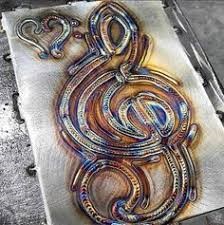
Stainless Steel is defined as a steel alloy with a minimum of 11% chromium content and performs better than ordinary steel in high temperatures and cryogenic applications.
Stainless steel is used where both these properties of steel and resistance to corrosion are required. Stainless steel does not corrode or rust as easily as ordinary steel.
Stainless steel contains more chromium than carbon steel and sufficient chromium to form a passive film of chromium oxide, which prevents surface corrosion and blocks corrosion from spreading into the metal’s internal structure.
The sizes of the chromium atoms and their oxides are similar and they pack neatly together on the surface of the metal, forming a stable layer which is only a few atoms thick. If the metal is cut or scratched and the passive film is disrupted, more oxide will quickly form and recover the exposed surface, protecting it from oxidative corrosion.
The passive film requires oxygen to self-repair, so stainless steels have poor corrosion resistance in low-oxygen and poor circulation environments.
The four main types of stainless steel are austenitic, ferritic, martensitic and duplex. These four types of steels are identified by their microstructure or predominant crystal phase.
Austenitic steels have austenite as their primary phase, face centred cubic crystal. These are alloys containing chromium and nickel (sometimes manganese and nitrogen). Austenitic steels are not hardenable by heat treatment and the most familiar stainless steel of this type is Type 304 and 316, as these grades are non-magnetic.
Ferritic steels have ferrite (body centred cubic crystal) as their main phase. These steels contain iron and chromium. Ferritic steel is less ductile than austenitic steel, is not hardenable by heat treatment and is magnetic.
Martensitic steels are low carbon steels and may be tempered and hardened. Martensite gives steel great hardness, but it also reduces its toughness and makes it brittle, so minimal steels are fully hardened. The known characteristic is an orthorhombic martensite microstructure.
Halfway between the ferritic and austenitic stainless steels is a stainless steel type called duplex stainless steel, which is about 50% ferrite and 50% austenite. Owing to this duplex structure, this type of stainless steel is resistant to stress corrosion cracking, which can affect the austenitic stainless steels in hot waters containing chlorides. The most common duplex stainless steel is 2205 (including both S31803 and S32205) and is used in many applications.
Duplex stainless steels are inherently stronger. For example, a grade such as 2205 (which contains about 0.15% nitrogen) has over twice the yield strength of Type 316L. As a result of this, 2205 is commonly used in tanks for tankers where both strength and corrosion resistance are required.
(Article extracted from a Euro Steel article – Engineering News 2016)
